
Saudi Arabia’s retail sector includes supermarkets, hypermarkets, grocery stores, convenience stores, wholesale outlets and large retail chains serving customers across the Kingdom. As these businesses expand their operations, maintaining the right workforce becomes an important part of daily store management.
A supermarket may require employees for many different activities, including customer assistance, shelf stocking, inventory handling, warehouse operations, cleaning, merchandising, delivery support and store maintenance.
During new-store openings, seasonal demand, business expansion or workforce turnover, recruiting enough employees can become challenging for retailers.
This is where supermarket manpower supply in Saudi Arabia can provide a practical workforce solution.
A professional manpower provider can help businesses source suitable workers according to their staffing requirements, job descriptions, experience and operational needs.
For supermarkets operating in Riyadh, Jeddah, Dammam, Khobar and other Saudi cities, workforce planning can help maintain efficient store operations while supporting customer service and inventory management.
This guide explains supermarket staffing requirements, common job roles, the benefits of manpower supply services and how retailers can select an appropriate workforce partner.
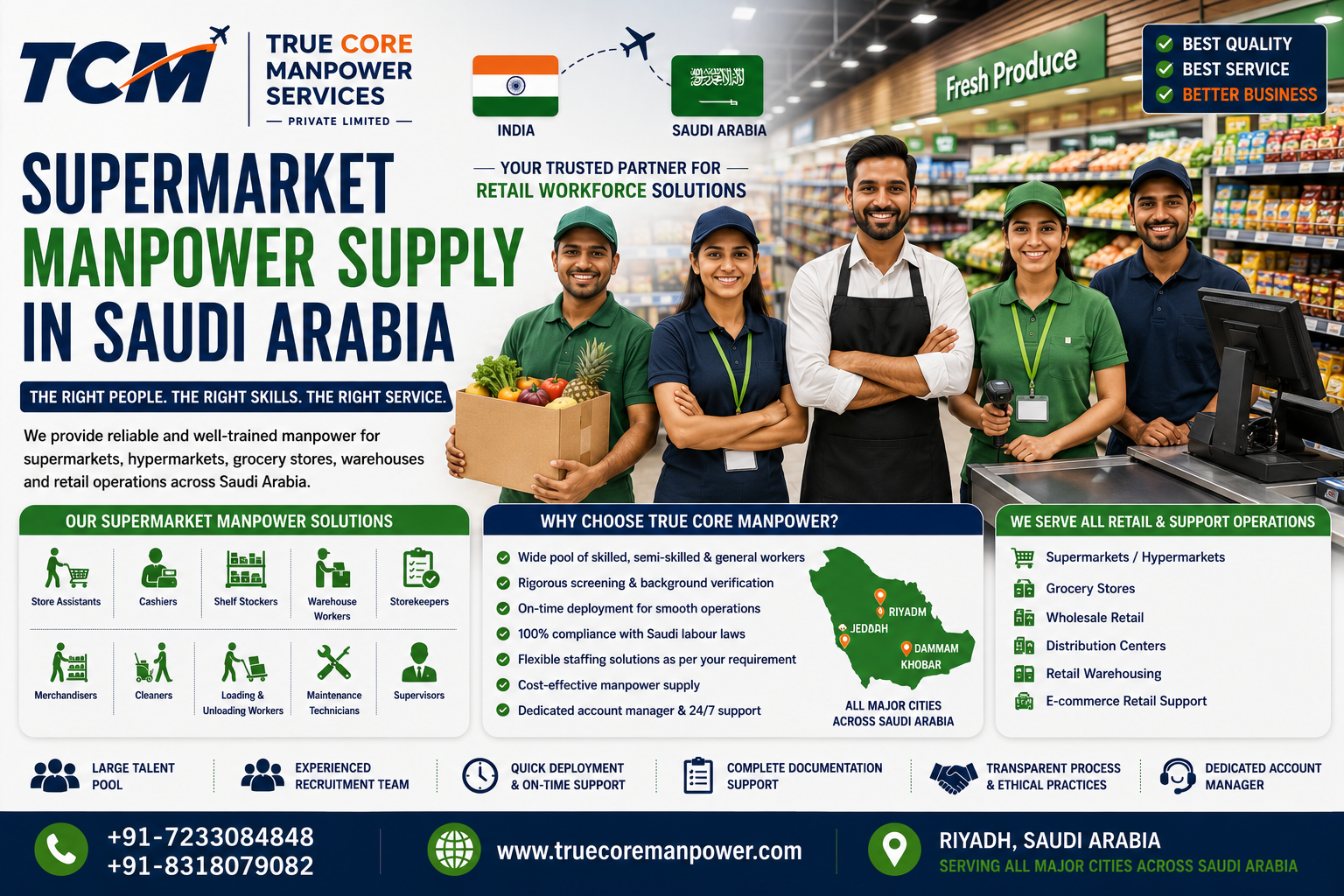
What Is Supermarket Manpower Supply?
Supermarket manpower supply refers to workforce recruitment and staffing solutions designed for supermarkets, hypermarkets, grocery stores and retail businesses.
Depending on the retailer’s requirements, manpower may be required for:
- Store operations
- Shelf stocking
- Customer assistance
- Billing and checkout support
- Inventory management
- Warehouse operations
- Loading and unloading
- Merchandising
- Cleaning
- Maintenance
- Delivery and logistics support
- Supervisory positions
The exact roles depend on the size and operating model of the supermarket.
For example, a large hypermarket may require separate teams for fresh food, grocery, warehouse, checkout, merchandising and customer service, while a smaller supermarket may need employees who perform multiple responsibilities.
Why Do Supermarkets Need Workforce Solutions in Saudi Arabia?
Supermarket operations are highly dependent on daily workforce availability.
Even when inventory and technology systems are well managed, businesses still need employees to perform physical and customer-facing tasks.
Workforce requirements can increase because of:
New Store Openings
A new supermarket may require a complete team before opening.
Business Expansion
Growing retail operations may require additional workers across stores and warehouses.
Seasonal Demand
Customer traffic can increase during holidays, festivals and other high-demand periods.
Employee Turnover
Replacing workers quickly can help businesses maintain operational continuity.
Extended Operating Hours
Supermarkets operating for long hours may require multiple shifts.
Distribution Requirements
Retail businesses also need warehouse and logistics workers to move products from distribution centres to stores.
A structured supermarket staffing services Saudi Arabia strategy can help businesses plan these requirements more effectively.
Common Supermarket Jobs in Saudi Arabia
1. Store Assistants
Store assistants support customers and daily supermarket activities.
Their responsibilities may include:
- Guiding customers
- Arranging products
- Restocking shelves
- Maintaining displays
- Supporting store operations
2. Shelf Stockers
Shelf stockers are responsible for keeping products available and properly arranged.
Their work may include:
- Replenishing shelves
- Checking product displays
- Organizing stock
- Supporting inventory teams
This role is particularly important in high-volume supermarkets.
3. Warehouse Workers
Supermarkets require warehouse employees to receive, organize and move inventory.
Common responsibilities include:
- Receiving goods
- Sorting products
- Stock movement
- Loading and unloading
- Inventory support
4. Storekeepers
Storekeepers help manage stock and inventory records.
They may monitor:
- Incoming products
- Outgoing products
- Stock levels
- Storage areas
- Inventory documentation
Experience with inventory systems can be valuable depending on the employer’s requirements.
5. Cashiers
Cashiers interact directly with customers and process purchases.
Their responsibilities may include:
- Scanning products
- Processing payments
- Issuing receipts
- Handling customer queries
- Maintaining checkout areas
Cashier recruitment should consider the employer’s requirements for customer service, payment systems and language skills.
6. Merchandisers
Merchandisers help maintain product displays according to store requirements.
They may be responsible for:
- Product arrangement
- Promotional displays
- Shelf presentation
- Stock visibility
7. Cleaners
Cleaning teams help maintain hygiene and cleanliness across:
- Store floors
- Restrooms
- Storage areas
- Customer areas
- Staff areas
Cleanliness is particularly important in food retail environments.
8. Loading and Unloading Workers
Supermarkets receive regular deliveries.
Workers may assist with:
- Unloading products
- Moving goods
- Organizing stock
- Loading delivery vehicles
Physical capability and safety awareness are important for these roles.
9. Maintenance Workers
Large supermarkets may require technical workers to support facility operations.
Depending on the requirement, this can include:
- Electricians
- HVAC technicians
- Plumbers
- General maintenance workers
10. Supervisors
Supermarket supervisors coordinate employees and daily activities.
They may oversee:
- Store teams
- Stocking
- Customer service
- Warehouse operations
- Shift activities
Supermarket Manpower Supply for Different Retail Operations
Different supermarket formats have different workforce requirements.
Hypermarkets
Large hypermarkets generally require larger teams covering:
- Grocery
- Fresh food
- Electronics
- Household products
- Customer service
- Warehouse
- Checkout
- Cleaning
- Maintenance
Supermarkets
Standard supermarkets may require:
- Store assistants
- Cashiers
- Stockers
- Warehouse workers
- Cleaners
- Supervisors
Convenience Stores
Smaller stores may require fewer employees but may need staff capable of handling multiple responsibilities.
Wholesale Retail Stores
Wholesale outlets may require additional warehouse, loading and material-handling workers because of higher-volume stock movement.
Benefits of Supermarket Manpower Supply
1. Faster Workforce Sourcing
Retail businesses may need workers quickly when opening new stores or replacing employees.
A manpower provider can support candidate sourcing according to predefined requirements.
2. Support for Bulk Hiring
Large supermarket chains may need dozens or even hundreds of workers across multiple stores.
A structured recruitment process can help organize hiring according to:
- Job role
- Store location
- Number of employees
- Shift requirements
- Experience
3. Flexible Workforce Planning
Retail demand can change throughout the year.
Businesses may need additional staffing during busy periods or new store launches.
Workforce planning allows retailers to prepare for these changes.
4. Reduced Recruitment Workload
Recruiting large numbers of workers requires considerable HR coordination.
A recruitment partner can support activities such as:
- Candidate sourcing
- CV screening
- Shortlisting
- Interviews
- Documentation coordination
5. Access to Different Workforce Categories
A professional supermarket manpower company Saudi Arabia can potentially support multiple categories within a single workforce requirement.
This can make recruitment coordination easier for businesses managing several operational departments
Supermarket Staffing in Riyadh
Riyadh is a major commercial and retail market in Saudi Arabia.
Supermarkets and retail businesses in the city may require employees for:
- Store operations
- Customer service
- Stock management
- Warehousing
- Cleaning
- Maintenance
- Logistics
Businesses opening new outlets may also require bulk recruitment across several job categories.
A manpower supply company in Riyadh can support employers by coordinating workforce requirements based on store locations, job roles and staffing numbers.
Supermarket Workforce Requirements in Jeddah
Jeddah’s large consumer market supports a wide range of retail businesses.
Supermarket workforce requirements can include:
- Store assistants
- Cashiers
- Stockers
- Warehouse workers
- Cleaners
- Merchandisers
- Supervisors
- Maintenance staff
Retailers can plan staffing according to store size, operating hours and customer volumes.
Frequently Asked Questions
What is supermarket manpower supply in Saudi Arabia?
Supermarket manpower supply is a workforce solution that helps supermarkets and retail businesses recruit employees for store operations, stocking, warehousing, cleaning, maintenance, customer service and related activities.
What types of workers do supermarkets need?
Supermarkets may require store assistants, cashiers, stockers, warehouse workers, storekeepers, merchandisers, cleaners, maintenance workers, loading workers and supervisors.
Can a manpower company provide workers for multiple supermarket locations?
Workforce providers may support multi-location recruitment depending on their recruitment capabilities and the employer’s requirements.
Can supermarkets hire workers from India?
Saudi employers may recruit non-Saudi workers from overseas subject to applicable recruitment, employment and work authorization requirements.
Why use supermarket staffing services?
Businesses may use staffing services to support bulk recruitment, workforce shortages, new store openings, expansion and recruitment workload management.
What cities can require supermarket manpower in Saudi Arabia?
Workforce requirements can arise in major commercial centres such as Riyadh, Jeddah, Dammam, Khobar and other cities depending on retail activity and business expansion.
Conclusion
The success of a supermarket depends on more than product availability and store location. A reliable workforce is essential for maintaining shelves, managing inventory, supporting customers, operating warehouses and keeping stores clean and functional.
As Saudi Arabia’s retail and commercial sectors continue to develop, businesses may need flexible workforce solutions for both new and existing supermarket operations.
Supermarket manpower supply in Saudi Arabia can help retailers address staffing requirements across store operations, warehousing, inventory management, cleaning, maintenance, merchandising and other support functions.
The right recruitment strategy starts with a clear understanding of the required job roles, workforce numbers, skills, experience and locations. Businesses should also ensure that recruitment and employment arrangements follow applicable Saudi regulations, particularly when recruiting non-Saudi workers.
For supermarket chains, grocery retailers and other businesses looking for workforce support, a professional manpower recruitment partner can help create a more organized approach to sourcing and staffing.
2 Responses